
10 Resume Elements to Eliminate for clean AI scans
If your resume is not getting callbacks, the issue is often structure, not experience. Use this guide to remove 10 common ATS blockers and replace each one with a clearer alternative.
 Create ATS
Resume
Create ATS
Resume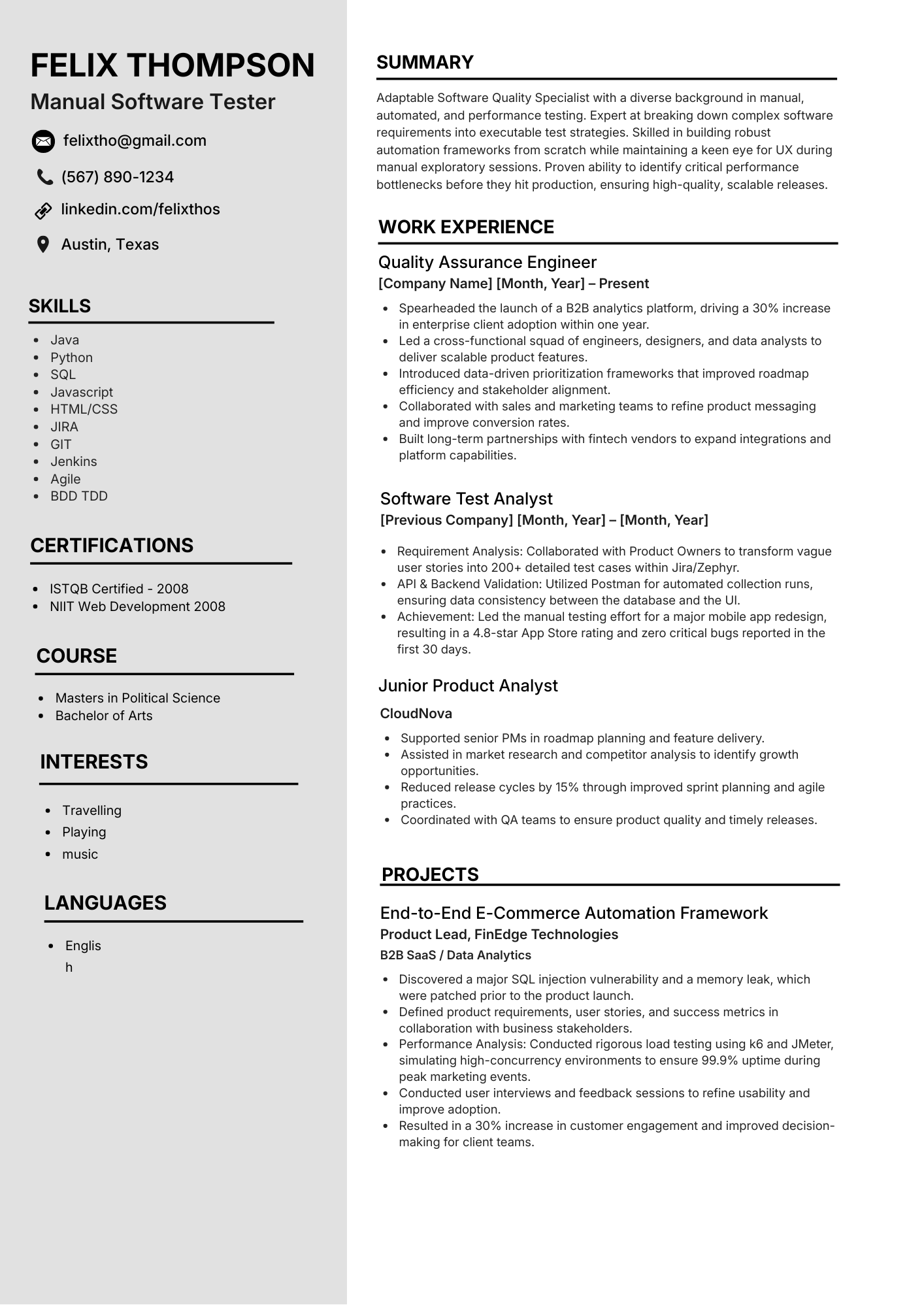
Core guide
10 resume elements to remove in 2026
Each item below includes what to cut, why it hurts parsing, and what to use instead.
Text inside images is invisible to parsers
Remove image-based headers or callouts. Put all key details in selectable body text so ATS tools can read them correctly.
Multi-column body layouts break reading order
Avoid splitting work history across columns. Use one main column so dates, titles, and bullets stay in sequence.
Skill bars and icon-only ratings hide evidence
Replace visual meters with plain text: tools used, scope of work, and measurable outcomes.
Decorative tables and text boxes cause extraction gaps
Keep formatting simple. Use clean headings and paragraph blocks instead of design-heavy containers.
Unfamiliar section labels reduce mapping accuracy
Use standard labels like Experience, Skills, Education, and Certifications for better parser matching.
Generic summaries waste top-of-page space
Swap vague intros for a role-specific summary with years of experience, key tools, and core outcomes.
Duty-only bullets do not show impact
Rewrite bullets using action + scope + result so both recruiters and systems can identify relevance fast.
Keyword stuffing looks unnatural and risky
Use targeted keyword coverage tied to real projects instead of repeating terms without context.
Inconsistent date formats confuse timelines
Pick one date style across all roles and education entries to improve chronology parsing.
PDF-only submissions limit compatibility
Keep both PDF and DOCX exports ready. Some systems parse one format better or require editable files.
Why NeuraCV
Compare builders before you submit applications
| Capability | NeuraCV | Canva | ChatGPT | Other AI Builders |
|---|---|---|---|---|
| ATS parsing integrity | Template-level validation | Design-first layouts | Text only, no parser map | Varies by export quality |
| No subscription lock | Free base + optional Pro | Paid feature gates | Depends on plan | Often paywalled export |
| Keyword guidance | Role and JD matching | Manual edits | Prompt dependent | Generic suggestions |
| Free ATS checker | Included | Not native | Not native | Sometimes limited |
| PDF + DOCX output | Both formats validated | Primarily PDF | Manual conversion | Inconsistent |
| Regional variant support | Built-in variant presets | Manual rewrite | Prompt rewrite only | Limited controls |
By specialty
Choose examples by job function
Software Tester Resume results-focused
Replace fuzzy ownership statements with automation scope, defect metrics, and release impact.
Data Analyst Resume business clarity
Eliminate dashboard-only bullets and show decision outcomes tied to tools and cadence.
Nurse Resume Example care outcomes
Remove generic care language and add patient volume, charting systems, and protocol compliance.
Marketing Resume Format pipeline impact
Convert campaign lists into funnel metrics, channel ownership, and conversion growth evidence.
How-to
Apply four final checks before you apply
Remove parser blockers first pass
Delete text-in-images, dense columns, and decorative skill bars that hide core evidence from ATS extraction.
Standardize section labels naming logic
Use predictable headings like Experience, Skills, Education, and Certifications so parsers map your details correctly.
Rewrite bullets with metrics evidence first
Pair action + scope + outcome in every bullet to improve recruiter trust and keyword relevance together.
Run final ATS validation before apply
Check parse score, missing terms, and export integrity across PDF and DOCX before submitting applications.
Skills clusters
Balance technical detail with clear language
Clinical-equivalent core rigor
- Quality assurance protocols and incident response
- Cross-functional handoff and escalation clarity
- Risk reduction through process adherence
- Compliance documentation quality
Systems & Tools stack fluency
- ATS platform parsing patterns and exports
- Structured resume template workflows
- Keyword mapping against job descriptions
- Version-safe PDF and DOCX generation
Professional impact habits
- Concise written communication
- Prioritization and decision ownership
- Stakeholder alignment across teams
- Execution velocity with quality control
Ready to rebuild
Turn weak formatting into shortlist momentum
Start with a global ATS-safe template, apply role keywords, and validate your score in minutes.
FAQ
Answers to common AI resume scan questions
Text inside images, multi-column body layouts, tables used for key experience details, icon-only ratings, and unusual section labels are common parsing blockers. Keep content in plain selectable text with standard headings like Experience, Skills, and Education.
Yes. Visual bars and infographic elements are often interpreted inconsistently. Replace them with text evidence that shows tools used, scope, and measurable outcomes.
Use relevant keyword coverage, not stuffing. Include role-critical terms from the job description and support each with project context, tools, and impact metrics.
Treat ATS score as a diagnostic signal, not a hiring guarantee. Prioritize parse quality, section accuracy, and role relevance over chasing one number.
Yes, when the PDF is text-based and parser-safe. Keep a DOCX version available for applications that explicitly request editable formats.
They can. Use common, readable fonts and avoid decorative styles. Clean spacing and clear section labels matter more than visual design effects.
Not always, but they increase parsing risk across systems. A single-column structure is the safest option for consistent reading order and field extraction.
Yes. Tailor the title, summary, skills, and top bullets to each target role while keeping your core experience accurate and ATS-safe.
Increasingly yes. Repeated keywords without evidence reduce quality signals. Use terms naturally and connect them to real achievements and outcomes.
Re-scan after major edits, before high-priority applications, and when switching role types. Frequent validation helps catch parser issues early.
Continue reading
More NeuraCV guides for your next application.
Keep building on your ATS-first resume with these companion guides and free tools from the NeuraCV editorial team.
