AI/ML Engineer resume template that passes ATS in 2026
Parser-safe layout with PyTorch, TensorFlow, RAG, and MLOps keywords built in. Lead with production deployment metrics and model lifecycle ownership that AI hiring teams scan for first.
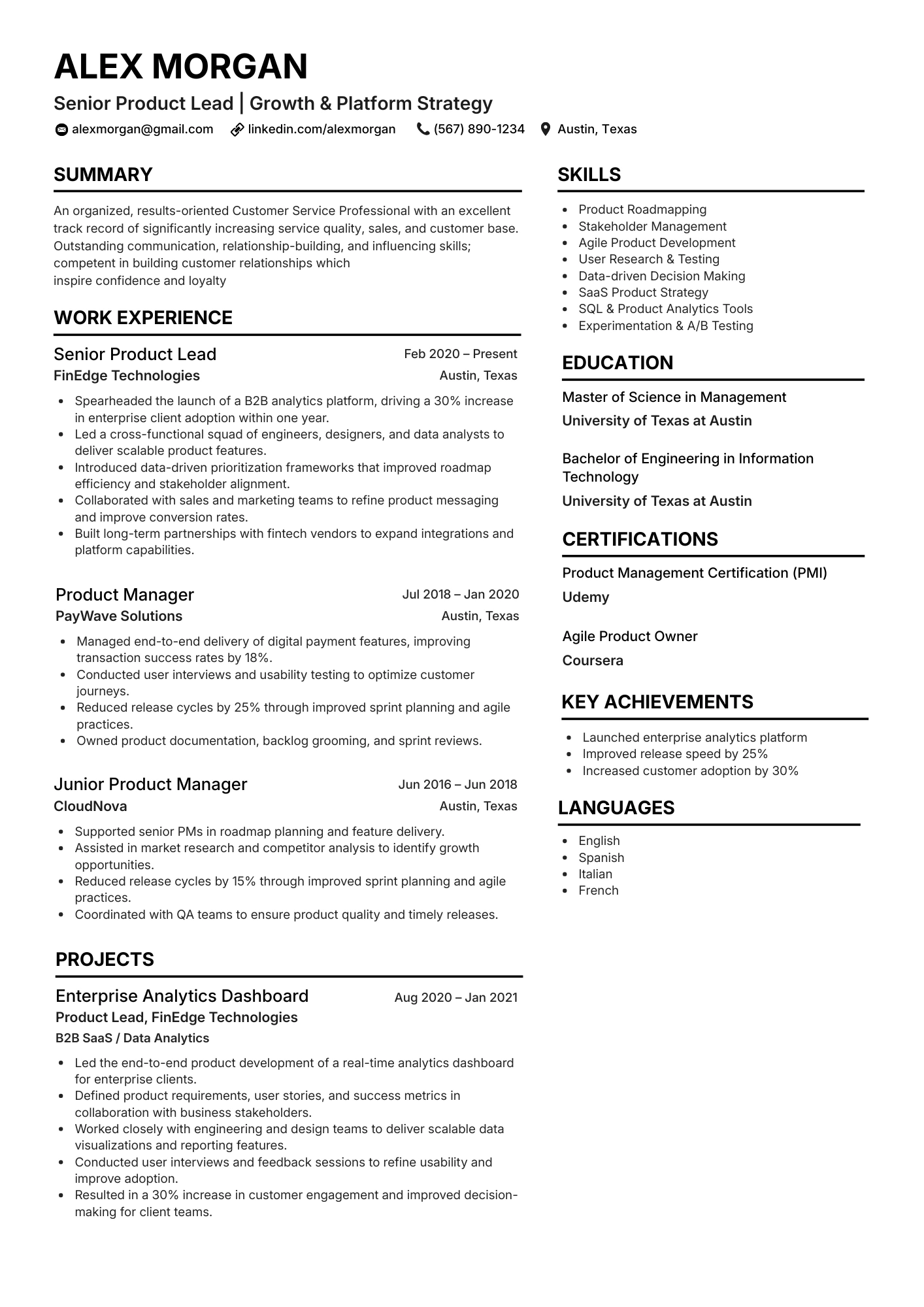
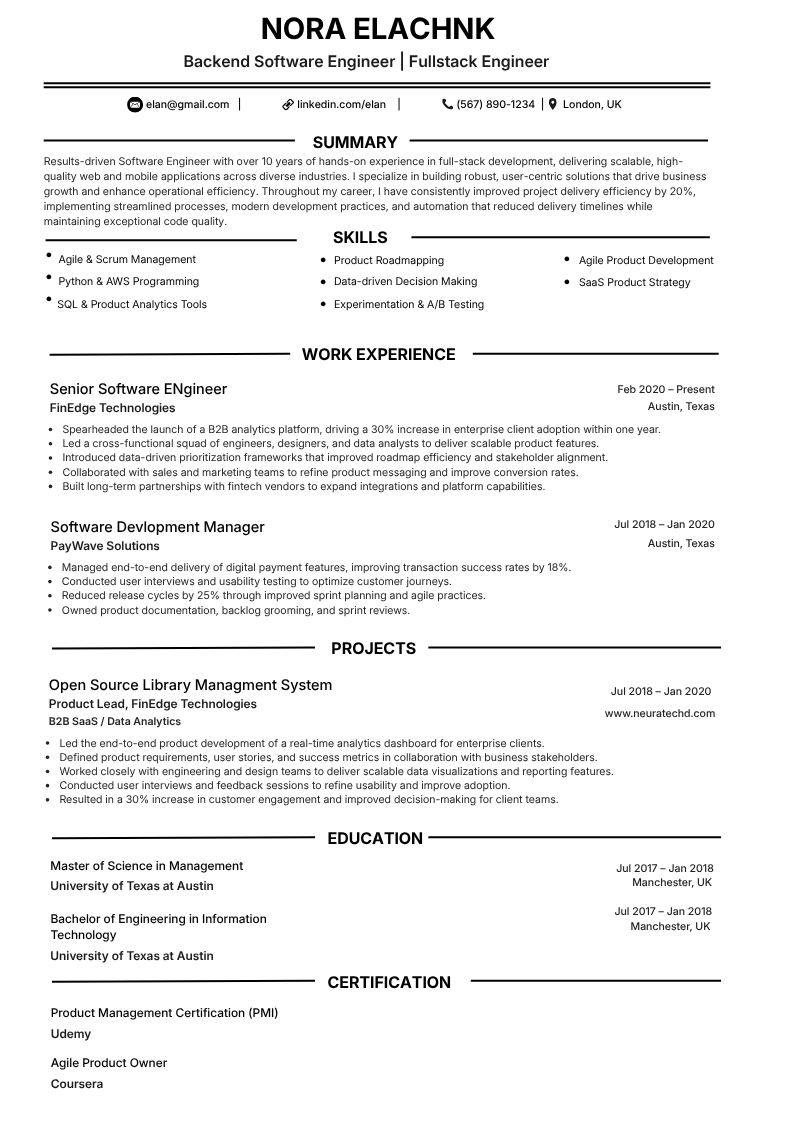
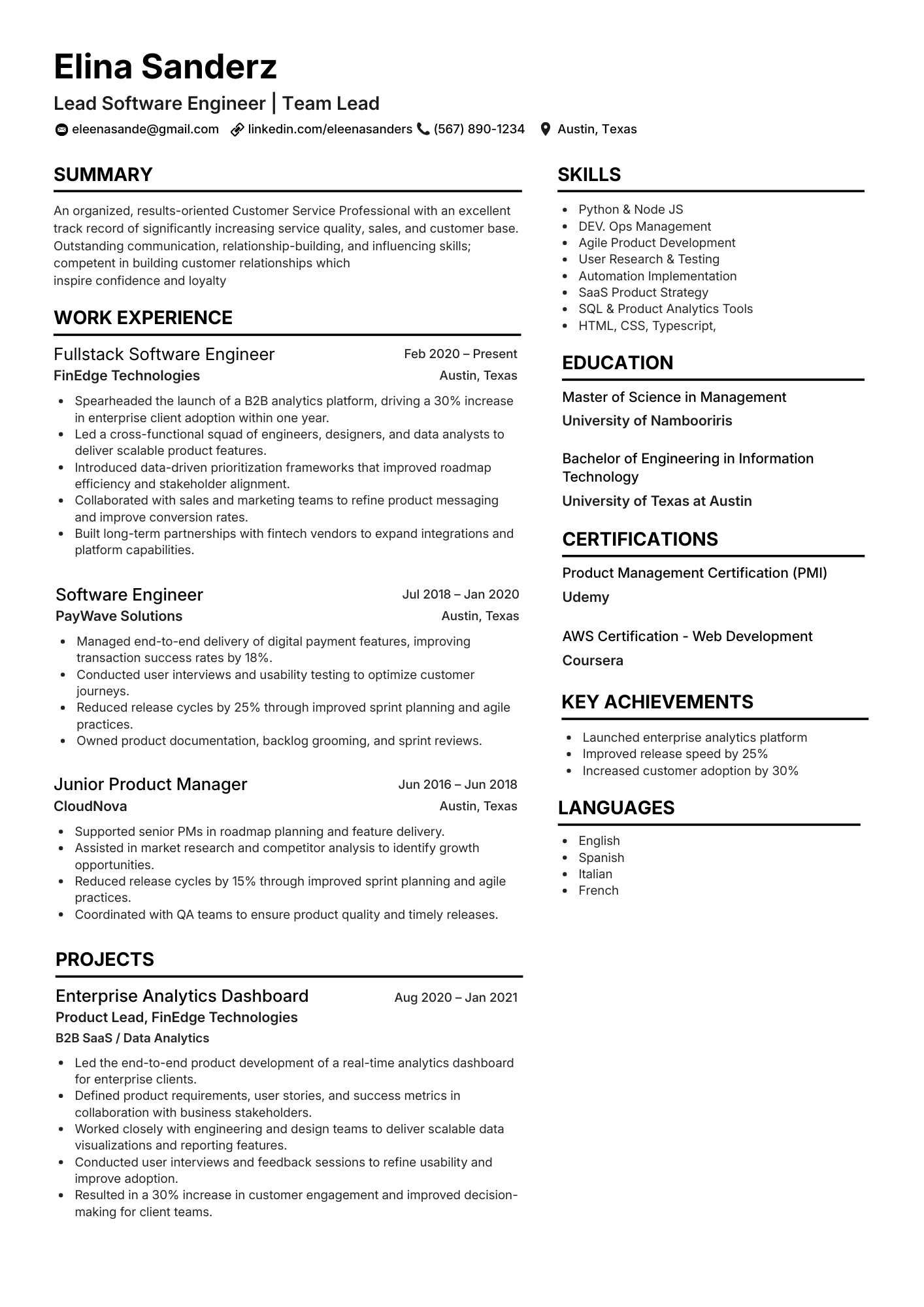
ATS-friendly layouts, ready for AI/ML roles
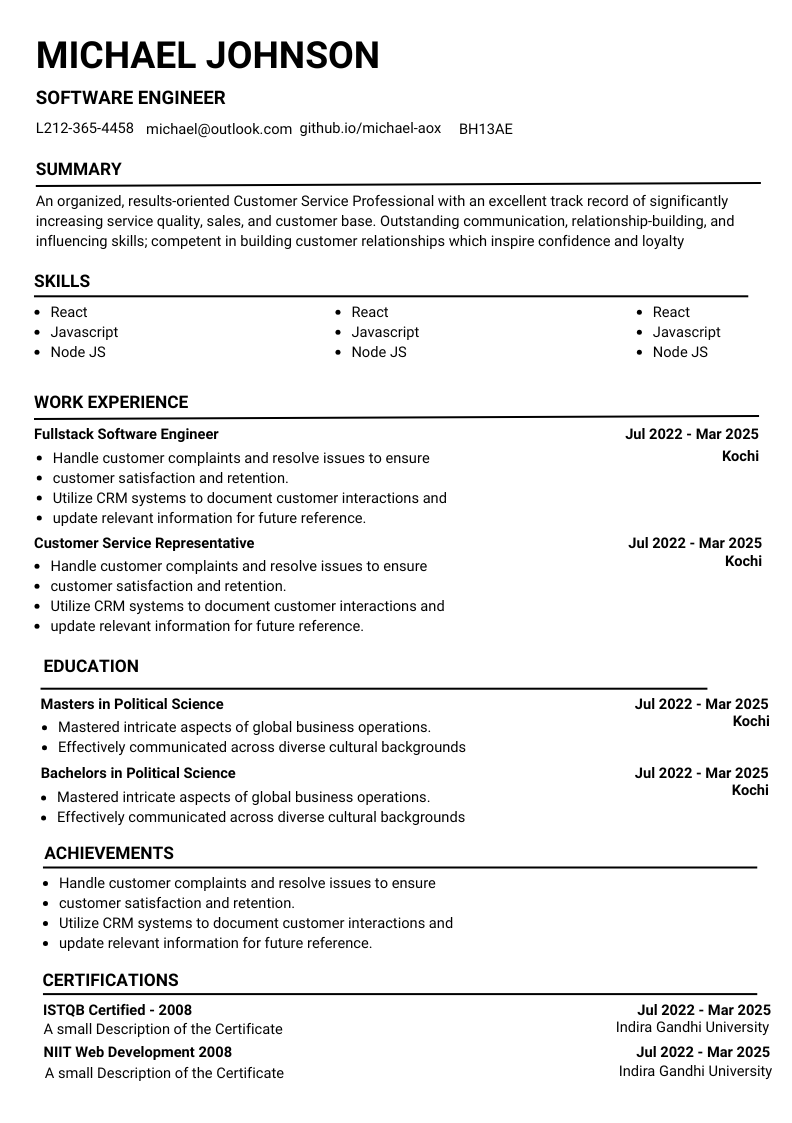
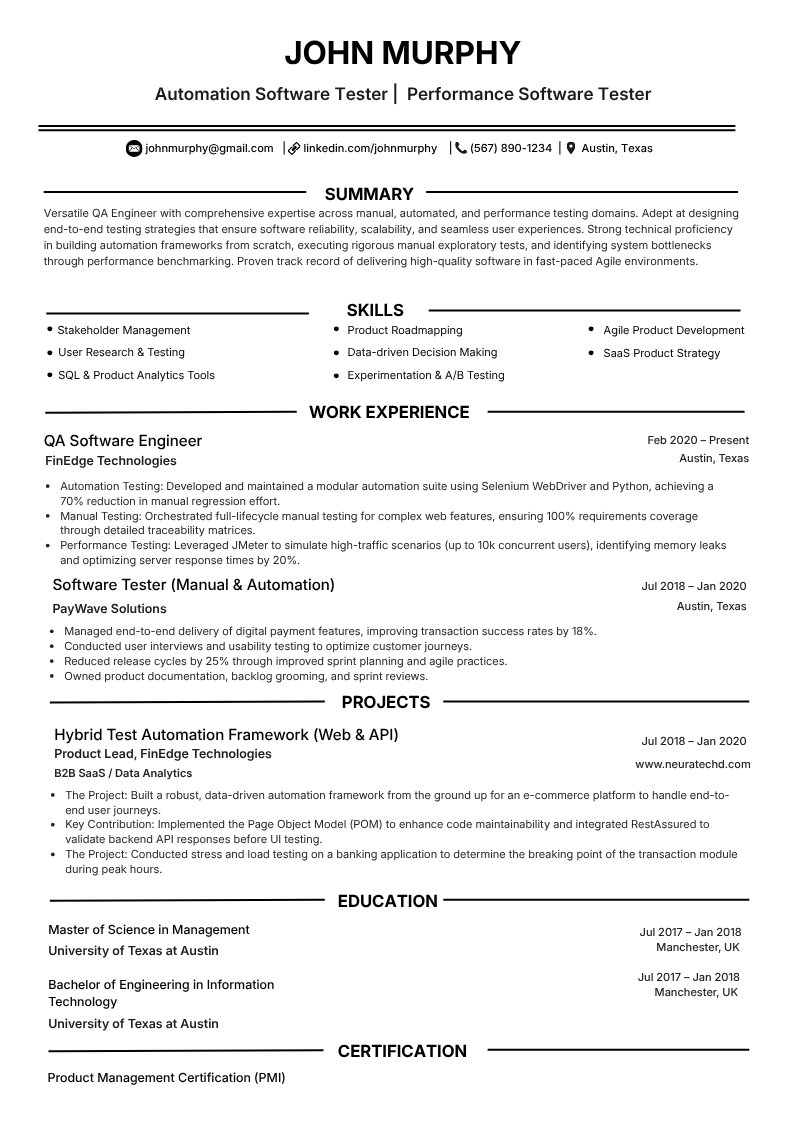
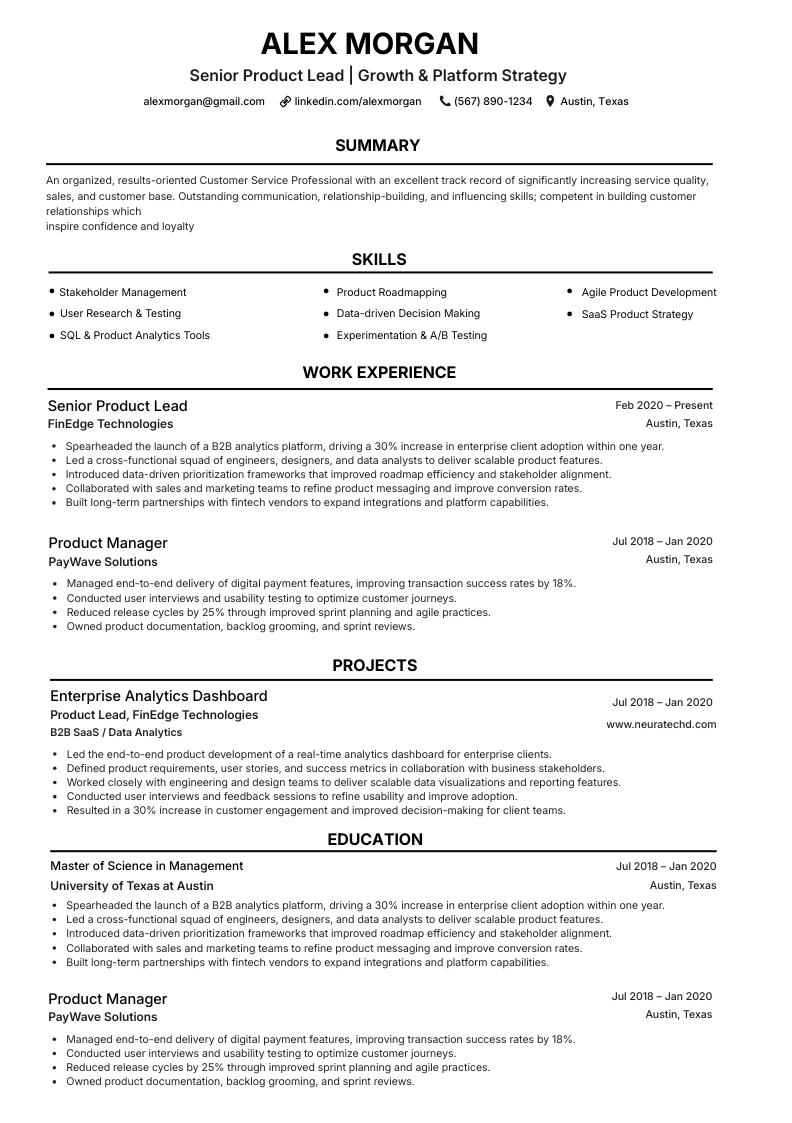
Every thumbnail is a real NeuraCV layout. Pick one to open in the builder with engineering-focused placeholder content you can tailor to your stack.
Why AI/ML resumes get filtered out before review
Three numbers explain the bar for AI/ML hiring in 2026. Use them to prioritize what your bullets must prove.
Core AI/ML keywords that 2026 ATS systems look for
Use exact framework, MLOps, and serving terms from your target job description. Mirror tool names instead of broad categories.
Frameworks and modeling
Show stack depth and model lifecycle ownership.
MLOps, serving and infra
Show production reliability and deployment cadence.
Production-grade bullets from a real AI/ML profile
This is how a senior AI/ML Engineer should describe scope, action, and outcome in each bullet so ATS systems and engineering managers can scan results in seconds.
Innovative AI/Machine Learning Engineer with 6+ years designing and deploying scalable deep learning models. Specialized in NLP, LLM fine-tuning, and MLOps. Track record of reducing model inference latency by 40% and shipping production-ready generative AI solutions tied to revenue growth.
Owned model lifecycle for LLM and RAG products
- Fine-tuned Llama 3 and Mistral with LoRA and QLoRA, lifting domain response accuracy by 28% for enterprise clients.
- Architected a scalable RAG pipeline using LangChain, Pinecone, and FastAPI, processing more than 1M documents per day.
- Optimized PyTorch inference with TensorRT and ONNX, reducing GPU compute costs by $15,000 monthly while increasing throughput.
Shipped vision and predictive ML to production
- Built a ResNet-50 + OpenCV defect-detection system with 99.2% accuracy on a manufacturing line.
- Implemented end-to-end Spark and Python pipelines on AWS SageMaker for continuous training and validation.
- Productionized experimental models into containerized microservices for reliable cross-team deployment.
- Reduced inference latency by 40% through ONNX and TensorRT optimization plus a smarter batching strategy.
- Scaled a RAG platform to process more than 1M documents per day with stable retrieval accuracy.
- Cut monthly GPU spend by $15K by optimizing model serving throughput and utilization.
- Led rollout of experiment-tracking standards that improved model reproducibility across teams.
Stop sending the same resume to every AI role
Tailor your AI/ML resume to each job description in minutes with NeuraCV. Free to start. No subscription.
What goes wrong on most AI/ML resumes
Three patterns are responsible for most AI/ML resume rejections in 2026. Fix them before you tailor for keywords.
Missing model architecture details
Vague "built ML models" lines do not match keywords. Name architectures, datasets, and metrics: transformer, LSTM, precision and recall.
No MLOps or deployment proof
Production roles expect vector databases, inference latency figures, model serving frameworks, CI/CD for ML, and monitoring context.
Generic skills without context
Tie skills to outcomes: "Python for distributed model training across 8 A100 GPUs, reducing training time by 40%."
Four steps to an ATS-optimized AI/ML resume
Follow these in order. Each one shifts your resume closer to how AI hiring teams and ATS systems read evidence.
Prioritize production AI scope in your summary
Open with years of experience, model domains, and one concrete deployment result so recruiters and ATS systems immediately understand your depth.
Mirror AI/ML stack terms from target job descriptions
Include exact framework and tooling names like PyTorch, TensorFlow, MLflow, Kubeflow, SageMaker, and vector databases to improve semantic matching.
Prove impact with deployment and performance metrics
Quantify outcomes such as latency reduction, training efficiency, model accuracy gains, throughput, or cost savings in each core bullet.
Keep layout parser-safe and role specific
Use a single-column reverse-chronological format with clear headings so ATS parsers and hiring teams can read your evidence without ambiguity.
What you get when you build an AI/ML resume in NeuraCV
Start building your standout AI/ML resume today with our template and watch your job opportunities grow.
Live keyword targeting
NeuraCV identifies missing high-value keywords like LLM Fine-tuning, RAG pipelines, and Model Quantization by comparing your resume against live ML Engineer job postings.
MLOps tool prioritization
The AI surfaces which MLOps tools SageMaker, Vertex AI, Kubeflow - are most frequently required so you prioritize the right experience for each role.
Format protection for ATS
Dynamic formatting preserves project descriptions, GitHub links, and arxiv citations through 2026 ATS parsers without context loss.
One-time pricing
No subscription. Build, export, and reuse your AI/ML resume across applications with PDF and DOCX exports.
AI/Machine Learning Engineer resume FAQs (2026)
Direct answers to the most common questions when writing an AI/ML resume for ATS-driven hiring.
How long should an AI/Machine Learning Engineer resume be in 2026?
For most ML Engineers with under 8 years of experience, 1 page is ideal. For senior engineers or researchers with publications, patents, or extensive deployment history, 2 pages is acceptable. Never exceed 2 pages. Focus on 3-5 high-impact projects with quantified outcomes.
What technical skills do 2026 ATS systems look for in an ML Engineer resume?
High-value ATS skills include PyTorch, TensorFlow, JAX, LLM Fine-tuning, RAG, vector databases (Pinecone, Weaviate, Chroma), MLflow, Kubeflow, SageMaker, Vertex AI, ONNX, model quantization, and distributed training frameworks. Mirror exact tool names from the target job description.
Should I include research papers or Kaggle rankings on my ML resume?
Yes. List papers with venue, your role, and contribution context. For Kaggle, include percentile, competition type, and participant scale (for example "Top 2% NLP Classification, 15,000 participants"). These signals improve recruiter trust when tied to role-relevant work.
How do I show MLOps experience without a dedicated MLOps role?
Describe model versioning with MLflow, containerized training jobs in Docker or Kubernetes, automated retraining pipelines, A/B testing of models, and monitoring dashboards for drift or performance. Even partial ownership of these systems is valid MLOps experience when written with clear outcomes.
What is the best resume format for passing ATS as an ML Engineer?
Use a single-column reverse-chronological layout with standard headings: Summary, Experience, Skills, Education, and Projects. Avoid infographics, skill bars, logos, or two-column layouts that break ATS parsing. Export as a clean selectable-text PDF.
Ready to ship an AI/ML resume that actually clears ATS?
Use NeuraCV to apply the exact structure, keywords, and metrics from this guide. No subscription. Free PDF and DOCX export.
Pair this with our deeper resume guides
Strengthen your AI/ML application with these companion resources from NeuraCV.
