Top personal statement CV ideas for faster interviews
Build your summary section with role-aligned keywords, strong proof points, and concise language recruiters can scan quickly.
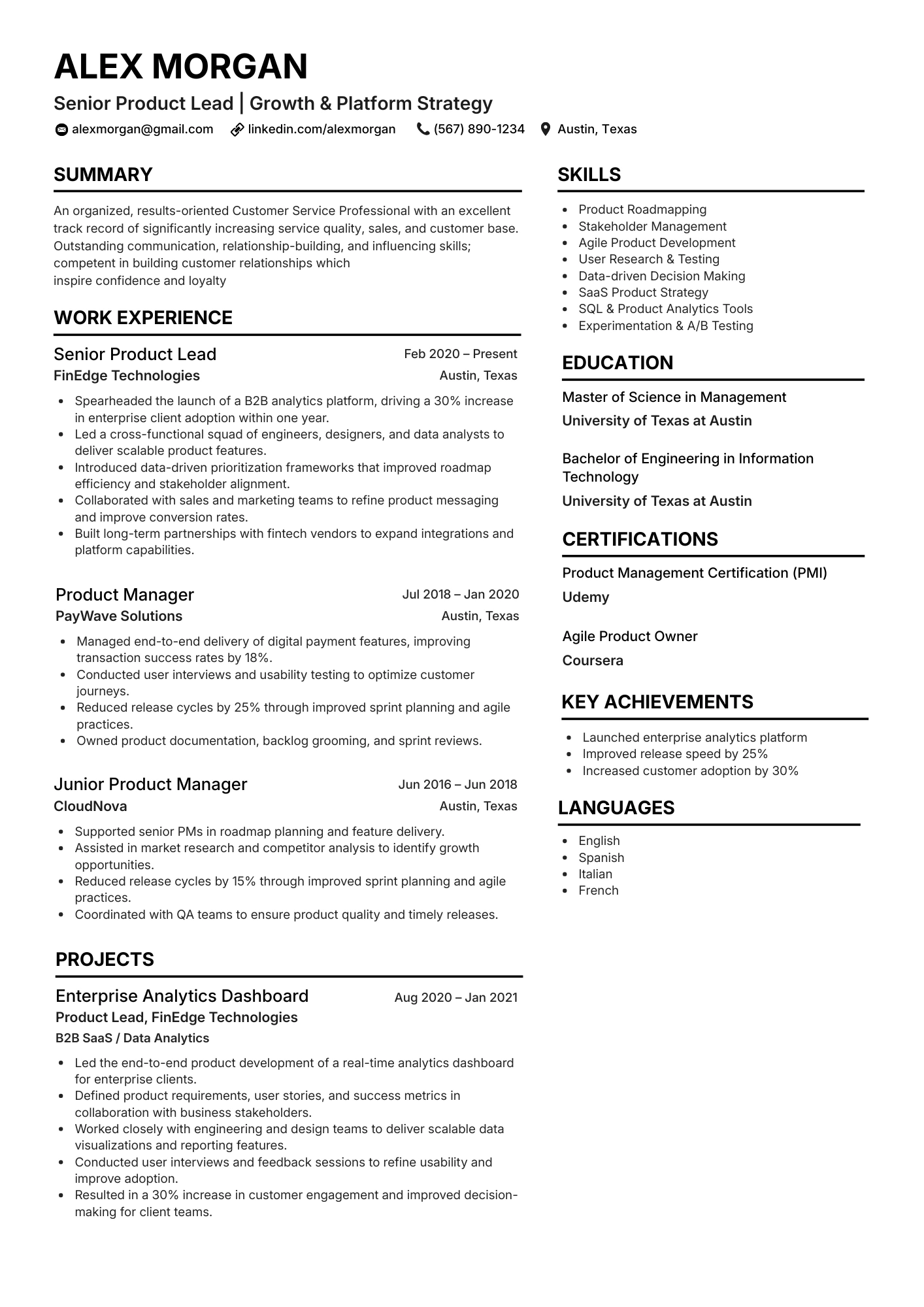
Personal statement designs for every intent
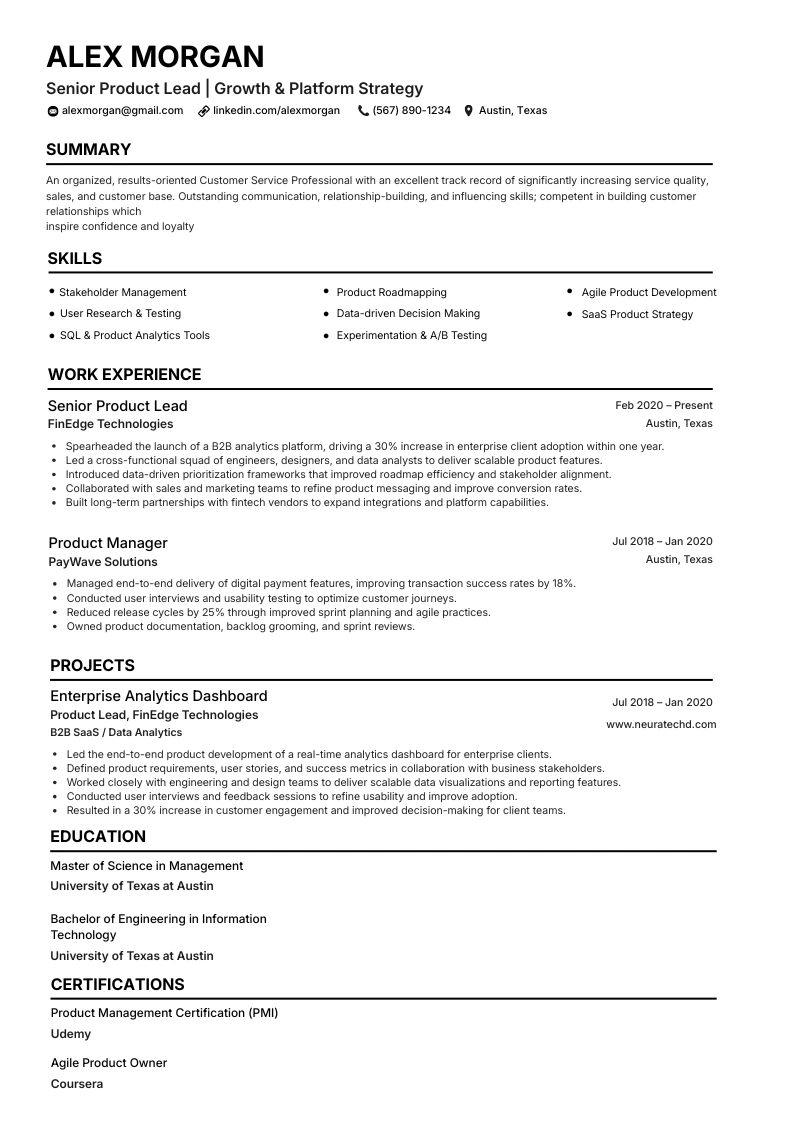
Executive profile for leadership roles
Outcomes-first summary for director and VP-level applications.
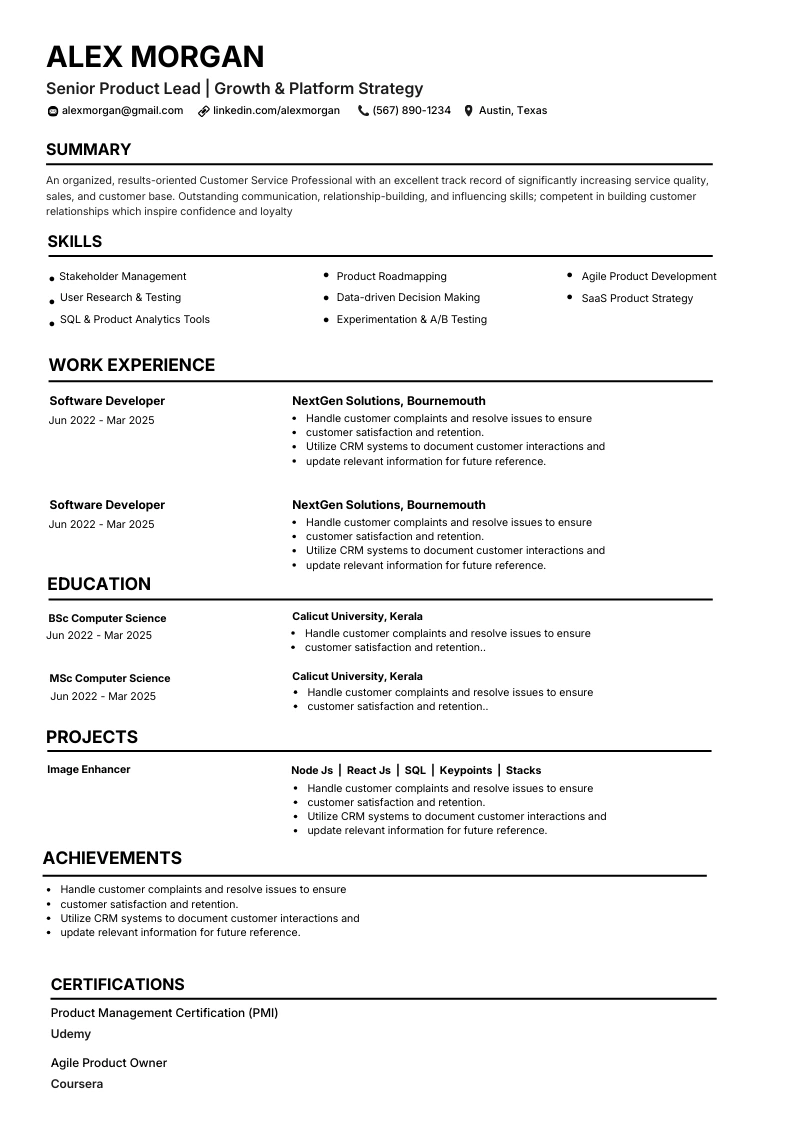
Graduate summary for early careers
Clear value framing for students and first-job candidates.
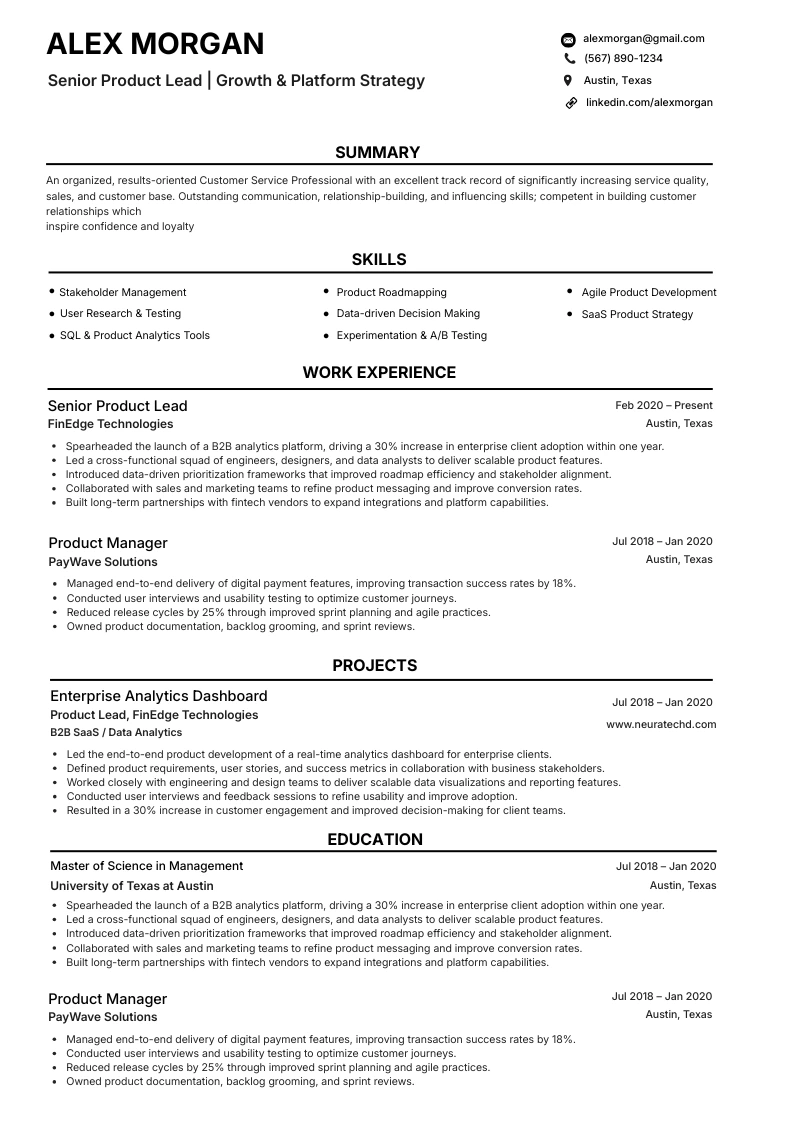
Career switch profile for a new direction
Bridge your previous domain to the target role with credibility lines hiring managers trust.
How NeuraCV compares for statement-heavy workflows
| Capability | NeuraCV | Canva | ChatGPT | Other AI builders |
|---|---|---|---|---|
| ATS parsing reliability | High, tested templates | Varies by design | Manual format | Inconsistent structure |
| No subscription workflow | Free start available | Premium locked assets | External formatting needed | Usually paywalled |
| Keyword guidance | Role-specific prompts | Manual research | Prompt dependent | Generic suggestions |
| Free ATS checker | Included | Not native | Not native | Often add-on |
| PDF + DOCX export | Both native | PDF focus | No native export | Often one format |
| Regional variant support | Localized variants | Template dependent | Manual rewrite | Limited controls |
Personal statement, professional summary, or profile: what to call it
Employers rarely care about the label in the margin. They care whether the first screen of your CV answers three questions in under ten seconds: what role you want, why you are credible, and what impact you bring. On a UK CV you will often see personal profile or personal statement. On a US-style resume the same block is usually titled professional summary or profile. Admissions-style personal statements are longer reflective essays. The CV block we mean here is short, employer facing, and sits at the top of the document.
Pick one heading that matches your market and template, then keep the body aligned with that choice. If you write senior product manager in the heading, the first sentence should reinforce product leadership rather than a general passion for innovation. Consistency between the heading, the opening line, and the first role in your work history reduces cognitive load for recruiters who skim in an F pattern.
Use the statement to frame scope, not to repeat your entire career. Think of it as a movie trailer. It should signal genre and stakes. The episodes live in your experience section. When you blur those boundaries you get dense paragraphs that feel impressive to you but read as noise to someone who did not live the projects.
Map the job description to proof without sounding robotic
Start from one target title, not three. If you are open to project manager and program manager, write two CV variants rather than one paragraph that tries to bridge both. Ambition is good. Ambiguity is expensive. Open the job description and highlight repeated nouns and verbs in the responsibilities and requirements lists. Those are your candidate keywords. Now audit your last twenty four months of work and mark where you already earned those terms with evidence.
Translate responsibilities into outcomes. If the post stresses stakeholder management, your statement should name a forum you owned, a cadence you ran, or a conflict you de risked with a measurable result. If the post stresses compliance, reference audits passed, policy rollouts, or risk controls you operated within. Keywords matter for ATS, but proof is what keeps you in the shortlist after the screen.
Order your lines for how recruiters read: role and domain first, proof second, toolkit third. Example shape: role plus years of relevant experience, one line with a metric and scope, one line that names two to three tools or methods that appear in the posting. Closing with soft skills alone is weaker unless you tie them to delivery, for example facilitation that shortened cycle time.
- Pull six to eight terms you can defend in an interview, not every synonym in the posting.
- Mirror the employer language where truthful, including product names and regulatory frameworks you actually used.
- Remove adjectives you cannot prove in the next section of the CV.
Before and after lines you can adapt
Each pair keeps facts stable while improving role clarity, numbers, and scan speed. Replace the brackets with your own evidence.
Operations lead pivoting to healthcare programme delivery
Passionate leader who thrives in fast paced environments and loves building teams. Strong communicator with a growth mindset and a track record of success across industries.
Operations lead with eight years scaling cross functional delivery. Cut release cycle time by twenty two percent in twelve months at [company]. Now targeting healthcare programme manager roles with experience in vendor governance and ISO aligned process design.
Graduate targeting data analyst roles
Recent graduate eager to learn and contribute. Hard working team player with strong Excel skills and a keen interest in data.
MSc graduate in [field] with capstone project on [topic] using SQL, Python, and Tableau. Built dashboards adopted by [stakeholder group], reducing manual reporting by [hours per week]. Seeking junior data analyst roles in [industry].
Sales account executive with quota proof
Dynamic sales professional who consistently exceeds expectations. Great relationship builder who knows how to close deals and delight customers.
Account executive with [years] selling [product category] to [segment]. Averaged [percentage] of quota for [period] and grew net revenue retention from [x] to [y] across a portfolio of [n] accounts. Comfortable with MEDDPICC and Salesforce CPQ.
Common mistakes that weaken shortlists
Generic enthusiasm is the most common failure mode. Words like passionate, driven, and results oriented rarely change a hiring decision because they carry no information density. Replace them with verbs tied to scope, for example led migration for three hundred seats or owned forecasting model used by finance weekly.
Another frequent issue is mismatched seniority. A senior statement should not read like a bootcamp graduate and an early career statement should not claim strategic transformation unless you can point to a credible project. Calibrate nouns to your level. Coordinator signals coordination depth. Director signals portfolio trade offs and org design.
Formatting choices also matter for ATS. Keep the summary in a single column under your contact details. Avoid icons or text boxes that hide characters from parsers. If your template uses colour, keep contrast high and do not rely on colour alone to convey meaning. Simple structure beats clever layout when your first audience is software.
- Do not list twelve technologies in one sentence. Prioritise the few that match the posting.
- Do not bury the role title after three lines of context.
- Do not contradict the employment dates or titles that follow in your CV.
Where it sits, how long it runs, and UK versus resume norms
Place the statement immediately below your name, contact details, and optional headline line. It should lead into experience or education depending on which section is stronger for your story. On a UK CV two to four lines is typical for the profile. On a US resume three to five lines can work if line length stays tight. If you need more space, move detail into bullet achievements rather than stretching the summary.
UK employers often expect CV personal profiles to be written in third person without pronouns, for example commercial manager with ten years in FMCG. US resumes more often use first person implied without pronouns, for example commercial manager with ten years in consumer goods. Both are acceptable if you stay consistent with the voice used in the rest of the document.
If you are applying across regions, keep one factual spine and adjust spelling, currency, and terminology. Small localisation signals attention to detail. They do not replace the need for proof, but they reduce subtle friction for readers who scan hundreds of files per week.
Start with role-specific wording for faster clarity
Nursing personal statement for care delivery
Lead with patient volume, safety metrics, and interdisciplinary coordination.
Software profile summary for product shipping
Position your stack, velocity, and measurable delivery outcomes in one block.
Sales profile statement for quota growth
Highlight pipeline quality, conversion rates, and customer expansion outcomes.
Analyst personal summary for decision support
Focus on insights, dashboard adoption, and model-driven actions.
Write your summary in four high-impact moves
Target one role for clear intent
Start with one role title and one domain to remove ambiguity.
Show evidence with one metric
Use a measurable achievement to prove value quickly.
Map keywords to real tools
Pull terms from the job post and map them to your experience.
Edit for flow and scan speed
Keep lines short, remove filler, and test readability.
Balance hard and soft signals for strong fit
- Outcome-oriented documentation
- Risk and compliance awareness
- Cross-functional coordination
- ATS keyword alignment
- Document versioning and exports
- Data-backed storytelling
- Structured communication
- Prioritization and ownership
- Continuous learning mindset
Sharpen the rest of your CV and ATS flow
These guides pair well with a stronger opening statement: tailoring, verbs, summaries, and ATS structure.
Build your next statement with guided precision
Start with ATS-safe templates, get role-targeted phrasing suggestions, and publish polished CVs quickly.
Answers to common statement questions for better applications
How long should a CV personal statement be?+
Keep it to three or four concise lines, usually fifty to ninety words. Open with your target role, add one proof point with a metric where possible, and close with relevant tools or domain keywords so recruiters and ATS tools parse your intent quickly.
Can I use the same personal statement for every role?+
You can keep one base narrative, then change the role title, two or three keywords from each job description, and one proof line so the statement matches the post. Sending the same paragraph to every employer reads generic and undermines shortlisting.
What makes a personal statement ATS friendly?+
ATS friendly statements use standard section headings, plain layout without decorative text boxes in the summary block, job aligned vocabulary, measurable outcomes, and familiar job titles instead of clever internal titles only your current employer recognises.
Should graduates include metrics in personal statements?+
Yes. Use project deadlines met, internship outputs, volunteer scale, society budgets you led, or module outcomes when they strengthen the target role. Metrics make early career statements feel concrete.
Does NeuraCV provide editable statement templates?+
Yes. NeuraCV offers editable templates by role and seniority, guidance on keyword placement, ATS checks, and exports to PDF or DOCX.
How should a first-job personal statement differ from a career change statement?+
First job statements foreground education, projects, and transferable habits. Career change statements name the destination role, map prior achievements to the new field, and show credible bridge experience such as certifications, portfolio work, or proven adjacent delivery.
Is a personal statement the same as a personal profile on a UK CV?+
In UK hiring they are often used interchangeably at the top of a CV. Both are short profile paragraphs. Personal statement sometimes implies university applications, while personal profile is common employer CV language, but the writing rules overlap.
Should I use a career objective instead of a personal statement?+
Employer CVs now favour a value forward summary rather than growth only objectives. If you are entry level, write a two line summary of skills plus impact, then let your applications show the roles you want.
Where should the personal statement sit on a CV or resume?+
Place it directly under your name and contact block, above work history. On a resume the same content is often labelled professional summary or profile. Keep the block in one column for predictable ATS reads.
Can I use AI to write my personal statement?+
AI can help brainstorm bullets and tighten wording, but verify every claim, remove generic phrases, and align lines with your real experience. Recruiters notice statements that read hollow compared with the CV that follows.
Do graphics or columns in the summary section affect ATS parsing?+
Heavy design in the header region can confuse some parsers when text sits inside shapes or multi column layouts. Prefer plain text in the summary area, readable fonts, and predictable ordering.
How do I tailor my statement without keyword stuffing?+
Pick six to eight posting terms you truly own, weave two into the opening sentence, add one metric line that naturally names a tool or domain, then place remaining terms in skills and experience. If it sounds repetitive when read aloud, delete duplicates.
