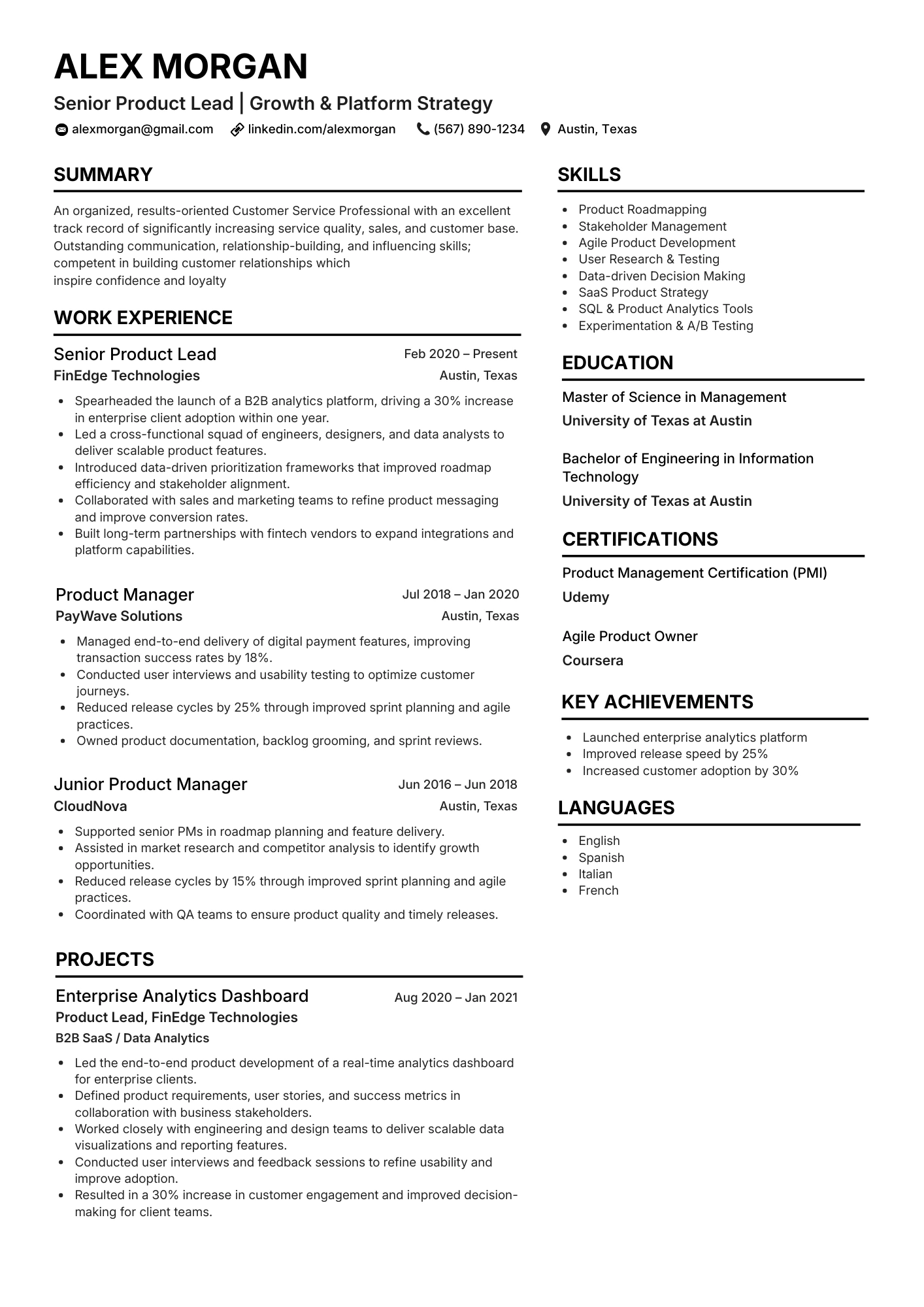
Rewrite experience bullets without starting from a blank page
NeuraCV gives you structured roles and bullet slots so you can swap verbs, add numbers, and align each line with the job spec. Export when the story still reads cleanly in PDF and plain text.
- Standard headings recruiters and parsers expect
- Suggestions that keep tone professional and concise
- Resume checker for structure and keyword fit
- PDF export for applications that ask for attachments
2026 UK hiring
What this guide covers
You will see how to order roles, write bullets that show outcomes instead of buzzwords, and keep the section short enough to scan in under a minute.
Goal: each line should show what changed because you were there, not every tool you touched.
What is the work experience section?
It is the part of your CV where you show what you delivered in paid roles, and sometimes in internships or volunteering when it is relevant. In the UK people often label it Work experience, Employment history, or Career history. Pick one heading and stay consistent.
Each entry usually lists employer, location or remote status, dates, job title, then bullets. The bullets are where you win interviews. They should show problems you owned, actions you took, and evidence of the result.
Where should work experience sit on your CV?
Most UK CVs place work experience after a short profile and before education. That order works when your recent jobs are the strongest signal for the role.
- Students and new graduates may lead with education or a projects section when work history is short. Add internships, part-time work, and placements here with the same bullet discipline.
- Career changers can place a skills or selected achievements block above experience, then write bullets that translate past work into language the new sector uses.
- Experienced hires usually keep experience first. Trim older roles to titles and dates unless they still support your target job.
How to write experience bullets that read like evidence
Think in three beats: scope, action, outcome. Scope sets the scene (team, product, region). Action is what you did. Outcome is what changed for the business or customer.
STAR and SOAR (same story, two labels)
STAR is Situation, Task, Action, Result. SOAR is Situation, Obstacle or Opportunity, Action, Result. You rarely fit all four words on one line. Use them as a mental checklist so the bullet still carries context and a result.
The four-step box below is the compact version: scope covers situation and task, the verb is the action, the last step forces an honest result and keyword check.
Turn a duty into a bullet in four steps
- Name the scope in a few words (who, what, or where the work applied).
- Start with a strong verb. Use past tense for finished roles and present tense for your current job.
- Add a measurable or qualitative result. Numbers help when you can share them.
- Check honest overlap with the job description. Repeat ideas, not the same keyword ten times.
When the project is small or the stack looks ordinary
Readers care whether you understood constraints and shipped something reliable. Say what was at risk if the work failed, what you chose, and what got easier or safer after. Tools belong in the line when they explain the outcome, not when you only want to name a fashionable library.
Who reads this line first?
A non-technical screener may match phrases to the job description. A hiring manager reads for judgment, trade-offs, and scale. Write so both can win: plain role language, honest keywords, and one clear proof per bullet where you can.
- Keep a separate skills block for tools and frameworks so job bullets stay about outcomes.
- Avoid repeating the same product name or framework at the start of every line.
Tense and voice
Write the current role in present tense ("lead", "own", "deliver"). Write every previous role in past tense. First person is implied, so skip "I".
Numbers when you cannot share exact figures
Use ranges, percentages you are allowed to quote, time saved, frequency, or relative improvement. If metrics are confidential, describe scale ("national rollout", "team of eight", "portfolio of retail clients").
Seniority without fluff
Show leadership through decisions and outcomes. Replace vague words like "visionary" with proof such as budget held, hiring led, or risk reduced.
Weak lines versus stronger replacements
Swap duty language for a line that states scope, decision, and outcome. The pattern applies across roles; the last row is a software-style example.
| Weaker (duty only) | Stronger (scope + proof) |
|---|---|
| Responsible for social media. | Grew LinkedIn engagement roughly 40% in six months by testing weekly content themes and a simple approval workflow with sales. |
| Worked on the mobile app. | Shipped two Android releases for a checkout flow used by about 120k monthly shoppers, cutting cart abandonment in user tests. |
| Managed stakeholders. | Ran a fortnightly steering forum for product, legal, and finance so a regulated feature launched on time without rework. |
| Used React and Node on internal apps. | Cut page load time for an internal claims tool by roughly half after profiling the React bundle and splitting routes, which reduced support tickets from operations. |
Common mistakes to fix before you apply
- Copying the job advert into your bullets without showing your own results.
- Listing twenty tasks for one role. Fewer lines with proof beat volume.
- Tech laundry lists in every bullet instead of one clean skills section.
- Starting each line with the same framework or product name so nothing stands out.
- Quoting a large team or budget with no link to what you changed.
- Describing only maintenance without any reliability, speed, or risk outcome.
- Mixing tense inside the same job block.
- Hiding dates or using unclear formats that break automated readers.
- Burying the most relevant role below unrelated jobs without a short explanation.
Experienced hires: fewer bullets, more signal
After several years in a field, long job blocks read like an autobiography. Lead each role with scope and impact, then keep roughly three to five lines that a tired reviewer can skim in seconds.
- Merge overlapping duties into one stronger line instead of stacking similar bullets.
- Older roles can shrink to title, employer, and dates unless they still prove something essential.
- Save deep detail for the interview. The CV should prove you are worth talking to.
ATS and experience
Keep your employment history machine-readable
Applicant tracking systems still rely on clean text and predictable headings. Your experience section should parse in the same order a human would read it.
- Headings: use familiar labels such as Work experience, Employment history, or Career history.
- Layout: keep role titles and dates in plain text rather than floating text boxes when your tool allows.
- Keywords: weave role-specific terms into bullets where they match your real work.
- Final check: paste your PDF into a plain text editor and confirm jobs appear in reverse chronological order.
FAQ
Quick answers: work experience on your CV
Straight UK-focused answers on layout, tense, proof, gaps, contracts, and what to sendexpand a card, skim the lead line, then dig into detail only where you need it.
1 What should I put in the work experience section of my CV?
List roles in reverse chronological order with employer, location, dates, optional one-line focus, and bullets that mix scope, actions, and outcomes.
Include paid work, relevant internships, and substantive volunteering when it supports the job you want.
Use month-year date ranges you can back up in a check, and keep job titles factual rather than inflated.
2 Should I use present or past tense for job descriptions on my CV?
Use present tense for a job you are in now and past tense for every previous role.
Keep tense consistent within each role so scanners and humans read a clear timeline.
Apply the same rule to your opening role line and every bullet under that role.
3 How many bullet points should I have per job?
Aim for roughly three to six strong bullets for recent roles and fewer for older ones.
Quality beats count. Drop lines that only repeat the job title or restate the job advert.
If space is tight, merge two weak bullets into one stronger line instead of padding the count.
4 How do I write achievements if I do not have numbers?
Use ranges, before-and-after language, frequency, or stakeholder scale when hard metrics are confidential.
Examples include reduced turnaround from weeks to days, handled peak-season volume for a twelve-person desk, or cut support tickets after a process change.
5 Where should work experience go if I am a student or changing careers?
Students and recent graduates often lead with education or projects when work history is thin.
Career changers may place a skills or projects block above experience, then show transferable bullets from past jobs that map to the new target.
6 Does NeuraCV help me check my work experience section for ATS?
Yes. NeuraCV keeps standard headings and readable exports, and the resume checker highlights structure and keyword fit.
You still need accurate dates, honest claims, and wording that matches each application.
7 Can I include volunteer work in work experience?
Yes when it demonstrates relevant skills or leadership.
Label it clearly as volunteer work and use the same bullet style as paid roles so reviewers see parity with professional experience.
8 Should I list every technology I used in each job?
No. Use a concise skills section for tools and frameworks, then mention technologies in a role when they support a clear outcome.
Avoid turning every bullet into a stack list or repeating the same framework name at the start of each line.
9 How do I show impact if my work was mostly maintenance?
Describe stability and reliability outcomes: fewer incidents, faster recovery, less downtime, simpler runbooks, or calmer handovers.
Name the system or user group that depended on the work, then state what improved.
10 How do I explain an employment gap on my CV?
You do not need a long story in the experience section.
Use accurate dates, then add one honest line in your profile or a short note beside the timeline if you took parental leave, study, relocation, health recovery, or redundancy.
Save detail for the interview and keep the tone factual, not defensive.
11 How should I show overlapping roles or promotions at one company?
List separate entries when titles or remits genuinely changed, with clear date ranges so overlap reads as progression rather than duplication.
If the work was the same contract with a title tweak only, one entry with a single updated title line can be cleaner.
Make sure the ATS plain-text view still reads top to bottom without confusion.
12 Should I label contract work differently from permanent roles?
Yes. Put the employer or client name you were paid through, mark contract or fixed-term in the title line or subtitle where it is normal in your field, and keep outcomes identical in quality to permanent roles.
Recruiters care about delivery, not the label, as long as dates and engagement type are transparent.
13 How far back should work experience go on a UK CV?
Most UK CVs keep roughly the last ten to fifteen years in full bullet detail, then collapse older roles to title, employer, and dates unless a job specifically needs that legacy story.
Early-career internships can drop to one line once you have stronger recent evidence.
14 Where should freelance or self-employed work sit on my CV?
Treat a steady freelance period as its own role with client types or project themes in bullets, anonymising sensitive names if needed.
If freelancing was occasional alongside employment, a short projects or additional experience block can avoid a cluttered timeline.
Be ready to explain revenue bands or pipeline in interview, not always on the page.
15 How do I present part-time work so it still looks serious?
State part-time in the title line or date note, then write bullets that read like outcomes rather than excuses.
Pair reduced hours with clear scope, for example systems owned, stakeholders served, or delivery cadence.
The goal is to show judgement and impact at the hours you actually worked.
