One-page resume that wins recruiter attention
Learn how to fit a sharp one-page resume without cramming: what belongs in the top third, how to choose layout and type, when two pages are fair, and NeuraCV templates you can open in one click - ready to tailor for employers anywhere.
At a glance
What you get with NeuraCV
Templates built for one page
Role-based layouts you can trim without breaking structure.
ATS tests before you apply
Check parsing, keywords, and readability in one pass.
Pricing that stays clear
Start free; upgrade when you need deeper editing or exports.
Hiring anywhere
Adapt spelling, titles, and section labels to match employers in any country.
One-page templates
Pick a layout then tighten it
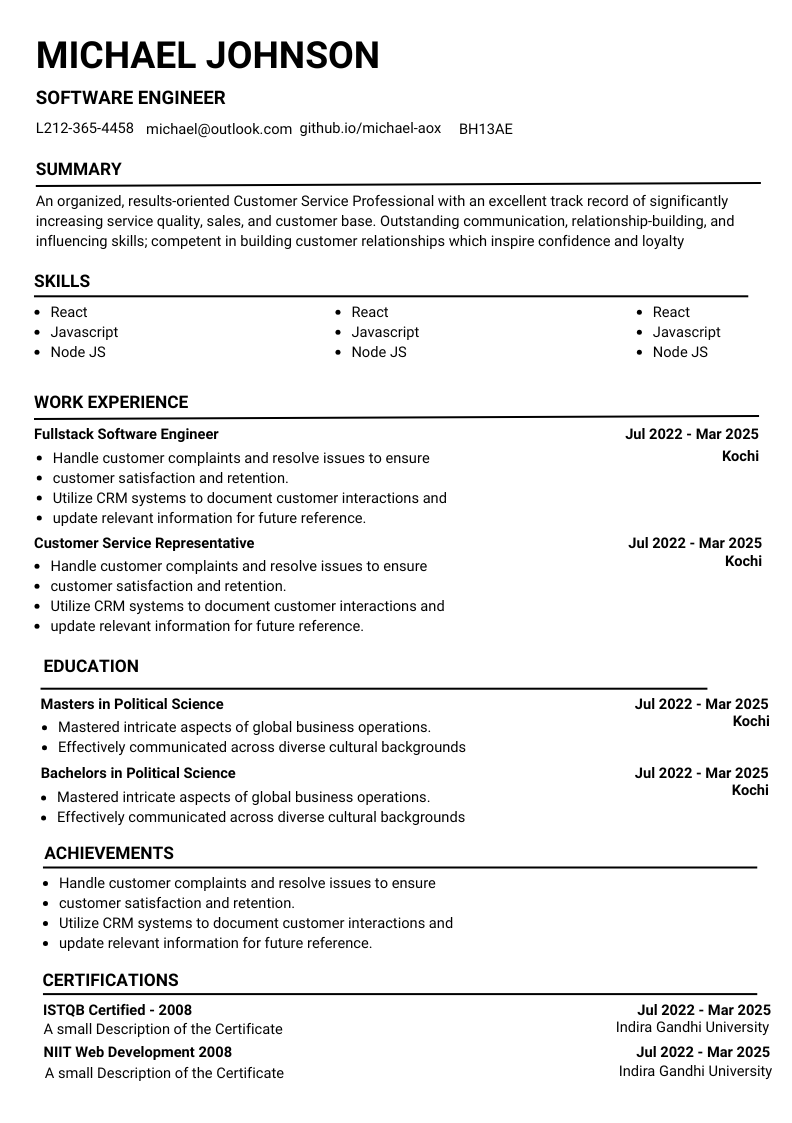
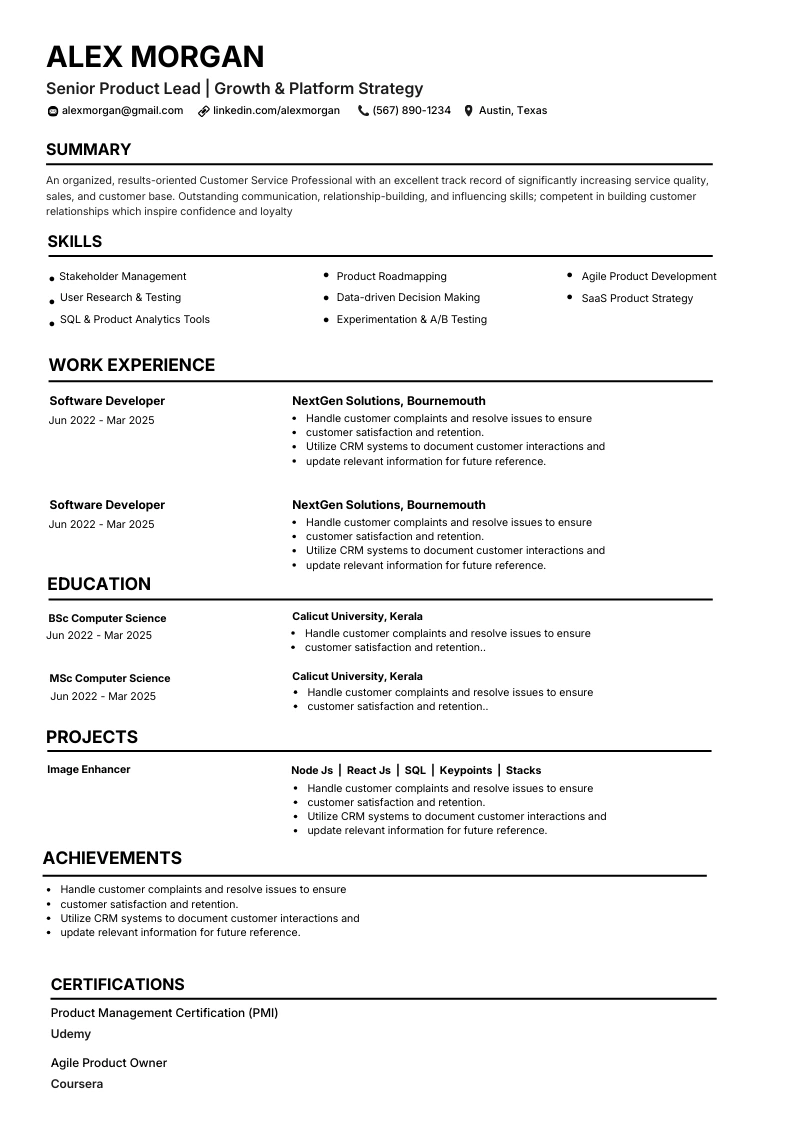
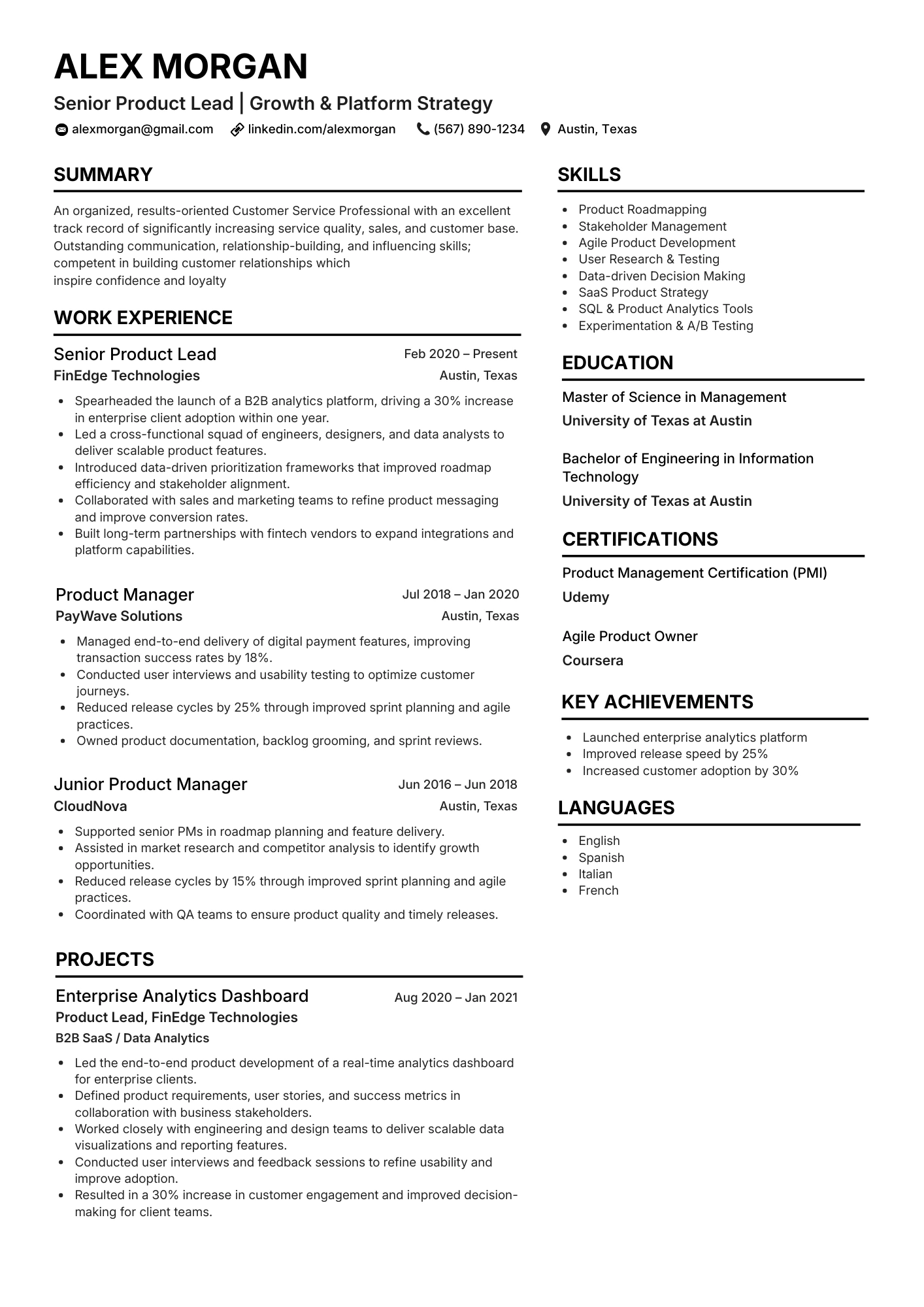
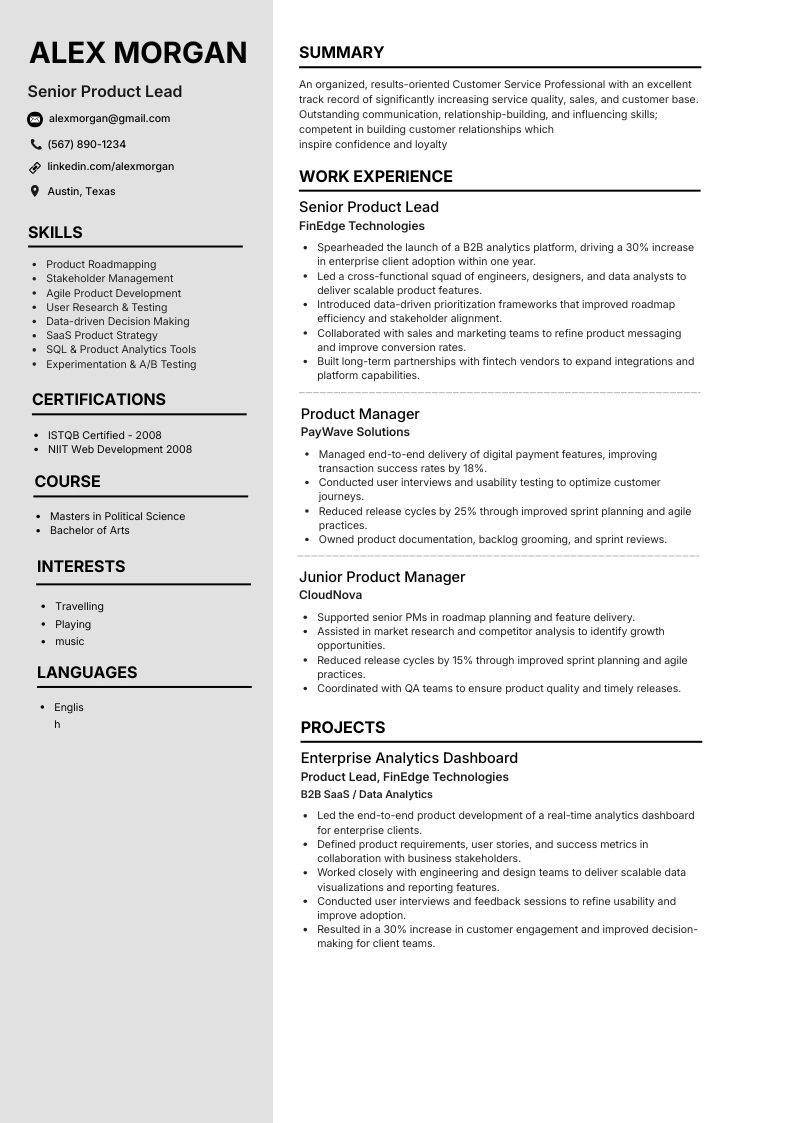
Below are core NeuraCV builder layouts (numbered templates) plus an IT analyst role-style sample - each opens in NeuraCV so you can swap sections, trim bullets, and export while the page still breathes.
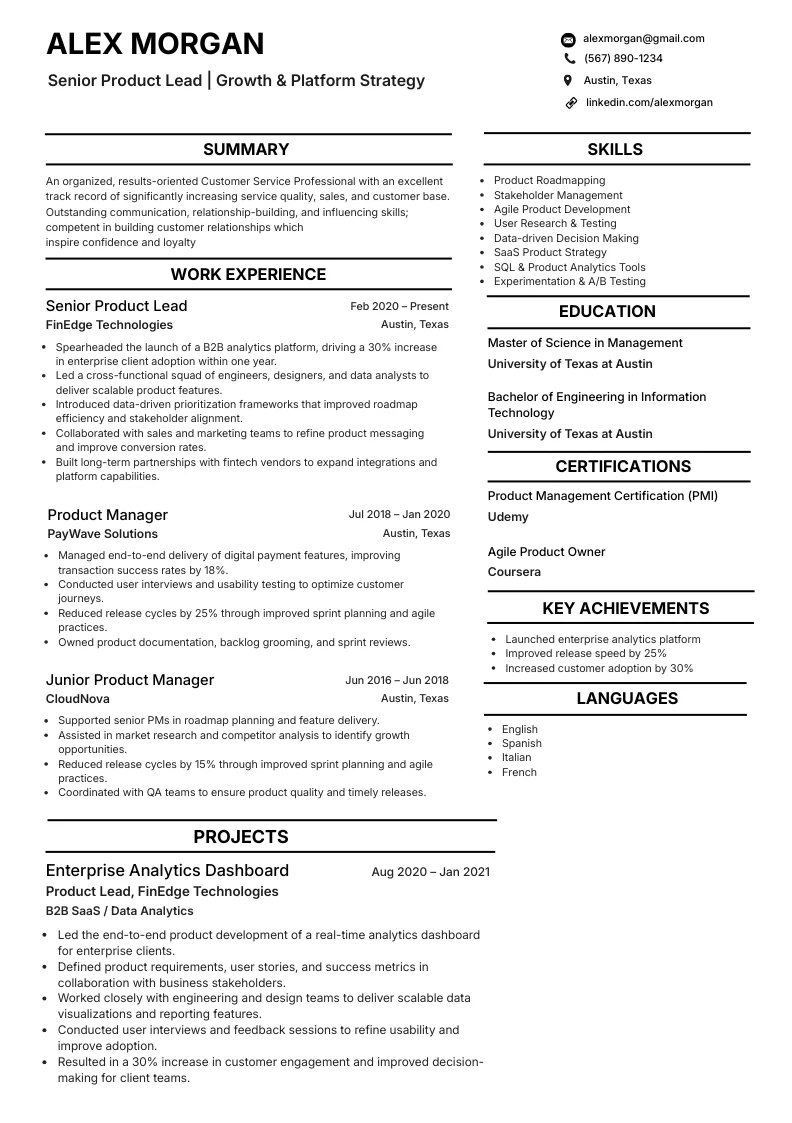
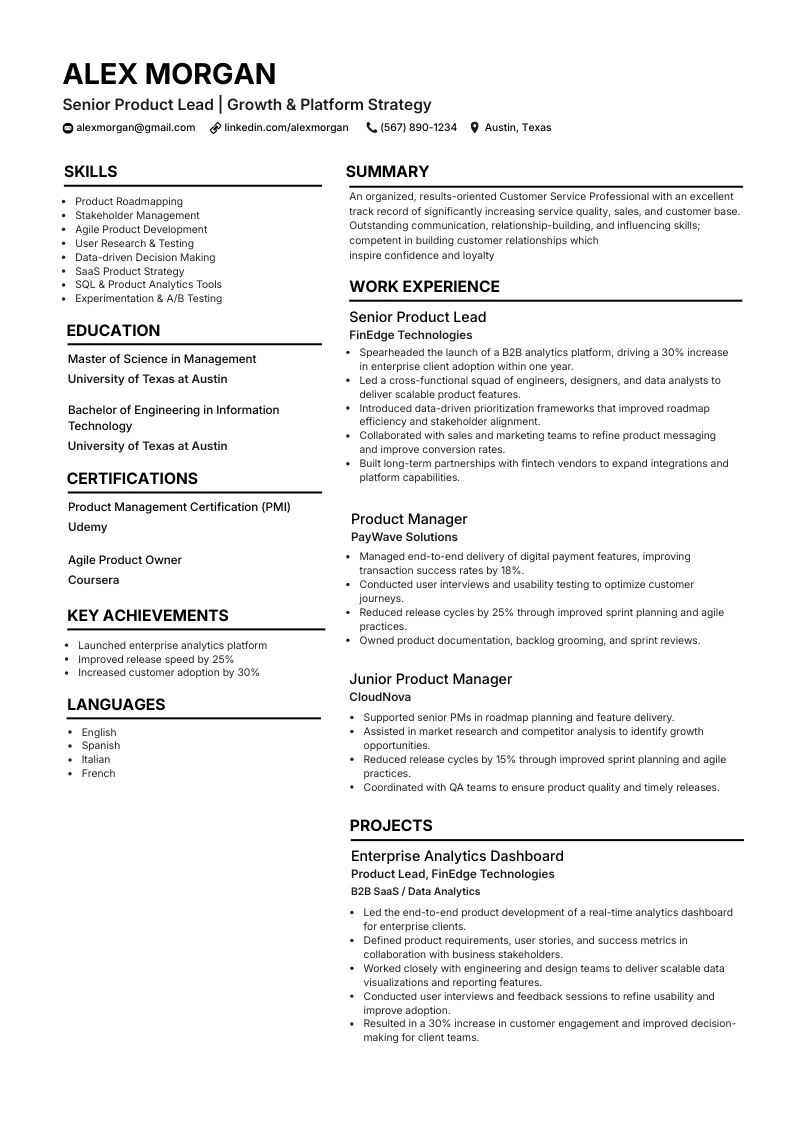
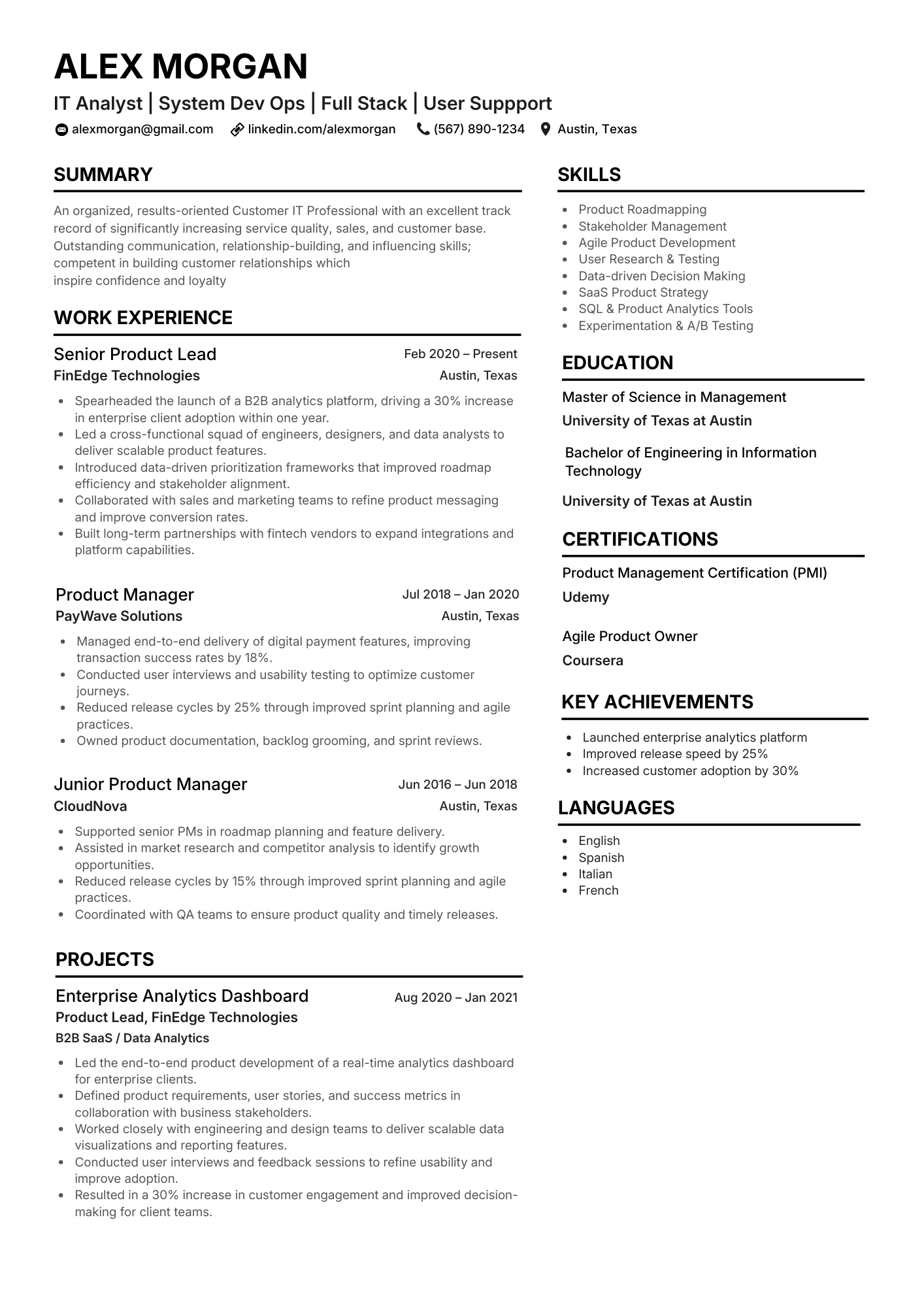
Why NeuraCV
How we compare at a glance
Same job search - different toolchains. See where layout, subscriptions, and checking diverge before you invest time in a one-pager.
| Capability | NeuraCV Recommended | Canva | ChatGPT | Other AI builders |
|---|---|---|---|---|
| ATS parsing & structure | Headings, exports, checker flow | Design-first; watch text boxes | Paste can strip layout cues | Varies by vendor |
| No forced subscription to start | Build & guest checks | Pro for many assets | Paywall depends on plan | Often credit-based |
| Keyword & role tailoring | Job-aware suggestions | Mostly manual | Strong text, not layout QA | Mixed quality |
| Free ATS checker | Instant score + fixes | No native ATS suite | Not a dedicated checker | Sometimes gated |
| PDF + DOCX export | Interview-ready files | Yes (layout dependent) | You format outputs | Common but uneven |
| Local resume & CV norms | Flexible for your market | Generic templates | Prompt-dependent | Hit-or-miss |
By specialty
Resumes by role and focus area
Pick a lane, mirror the job's language, and keep one page of proof - not a career autobiography.
Engineering and delivery
Keep stack tokens and system scale on page one; push side projects to links if they dilute the role story.
Clinical & support roles
Licensure, settings, and patient volumes beat generic "hard worker" lines - tight, compliant wording wins.
Revenue and success
One page of quota, pipeline, and account proof reads stronger than long territory essays.
Data & research disciplines
Methods, tools, and business outcomes: label figures so ATS and humans see impact fast.
How to
Build yours in four clear steps
Decide length with evidence
Default to one page for early and many mid-career roles. Move to two only when every extra line is relevant proof - not padding.
Front-load the first screen
Name, headline, contact, a tight profile, then your strongest role so scanners see value before the fold.
Trim, merge, then tighten
Delete redundant bullets, merge overlapping duties, and keep body text at a readable size - never shrink below ~10pt to cheat length.
Verify ATS then export
Run the resume checker, export PDF or DOCX, and paste plain text to confirm order, headings, and keywords survived.
Signal per line
Skills to keep on one page
Group proof so human readers and parsers see themes fast - use honest keywords from the job description.
Clinical-equivalent (impact)
- Measurable outcomes, not adjectives
- Scope, caseload, or quota where ethical
- Regulatory or quality context when relevant
Systems & tools
- Stack, platforms, and certifications
- Data, design, or ops tooling - match the ad
- Plain section labels for ATS: Skills, Education
Professional
- Cross-functional work and leadership
- Communication, mentoring, stakeholder mgmt
- Change, incidents, or programme delivery
Ready for a one-pager you can defend in interview?
NeuraCV keeps structure plain, metrics honest, and exports readable when recruiters copy text or an ATS ingests your file - tailor, check, then apply with confidence.
Quick answers
One-page vs two-page: common questions
Straight rules on length, layout, and what to cut - whether you are tightening to one page or deciding if two are justified.
Should my resume be one page?
Often yes for early and mid-career roles - when you can fit real proof without tiny fonts or crushed margins.
- Recruiters skim the first screen first; one tight page usually beats two weak ones.
- With roughly ten or more years of directly relevant roles, two pages can be fine if every line on page two supports the job you want.
When is a two-page resume OK?
Two pages are usually acceptable when you truly need room for multiple relevant roles, leadership scope, or technical depth you cannot compress honestly.
- If page two is mostly filler, edit page one harder instead of adding length.
- Put your strongest proof on page one either way.
Can a resume be 1.5 pages?
Avoid it. A half-empty last page reads unfinished to both people and parsers.
Either tighten to one strong page or commit to two full pages with consistent layout and no awkward white space at the foot.
What should go in the top third of a one-page resume?
Lead with identity and proof: name, headline, contact, a short summary or profile, then your strongest recent experience.
- Mirror the job title or cluster once in the headline or summary when it is accurate.
- Hiring teams often decide whether to keep reading from that first screen.
How do I cut my resume to one page?
Cut content before you crush typography.
- Remove older roles that do not support your target job; merge duplicate bullets.
- Keep about three to six strong bullets per recent role; move extra detail to LinkedIn or a portfolio link.
- Narrow margins slightly only if type stays readable; treat ~10pt body text as a practical floor.
- Export, then run an ATS check so you do not delete keywords you still need.
Is a two-column resume OK for one page?
Yes, when the layout stays parser-safe: real text, standard section headings, and no skills or jobs trapped inside images, tables, or text boxes.
After export, paste plain text from your PDF to confirm order and headings still make sense to an ATS.
What font size is too small on a one-page resume?
Treat about 10pt as a practical floor for body text on letter- or A4-sized layouts - smaller type looks cramped and hurts both ATS and human readability.
- Headings can be one step larger than body text.
- If you need smaller fonts to fit everything, you usually have a content problem, not a typography problem.
Will a one-page resume hurt me as a senior candidate?
Not if your one page is dense with relevant proof - many experienced hires still use one page when every line maps to the role.
If you have a long track record of directly relevant leadership or technical scope you cannot compress, two full pages are acceptable; use the two-page guidance above.
Does NeuraCV help keep a resume ATS-friendly on one page?
Yes. Layouts and exports are built for selectable text and standard headings, and you can run a resume check before you apply.
You still need honest tailoring, consistent dates, and keywords that match the role.
More NeuraCV guides for your next application.
Keep building on your ATS-first resume with these companion guides and free tools from the NeuraCV editorial team.
